What Is The Black Arts Codex?
What Is The Black Arts
Codex?
The series opens with a question: for centuries, the story of the fine and classical arts has been told through a narrow lens. What happens when entire lineages are left out? This is the archive that answers back.
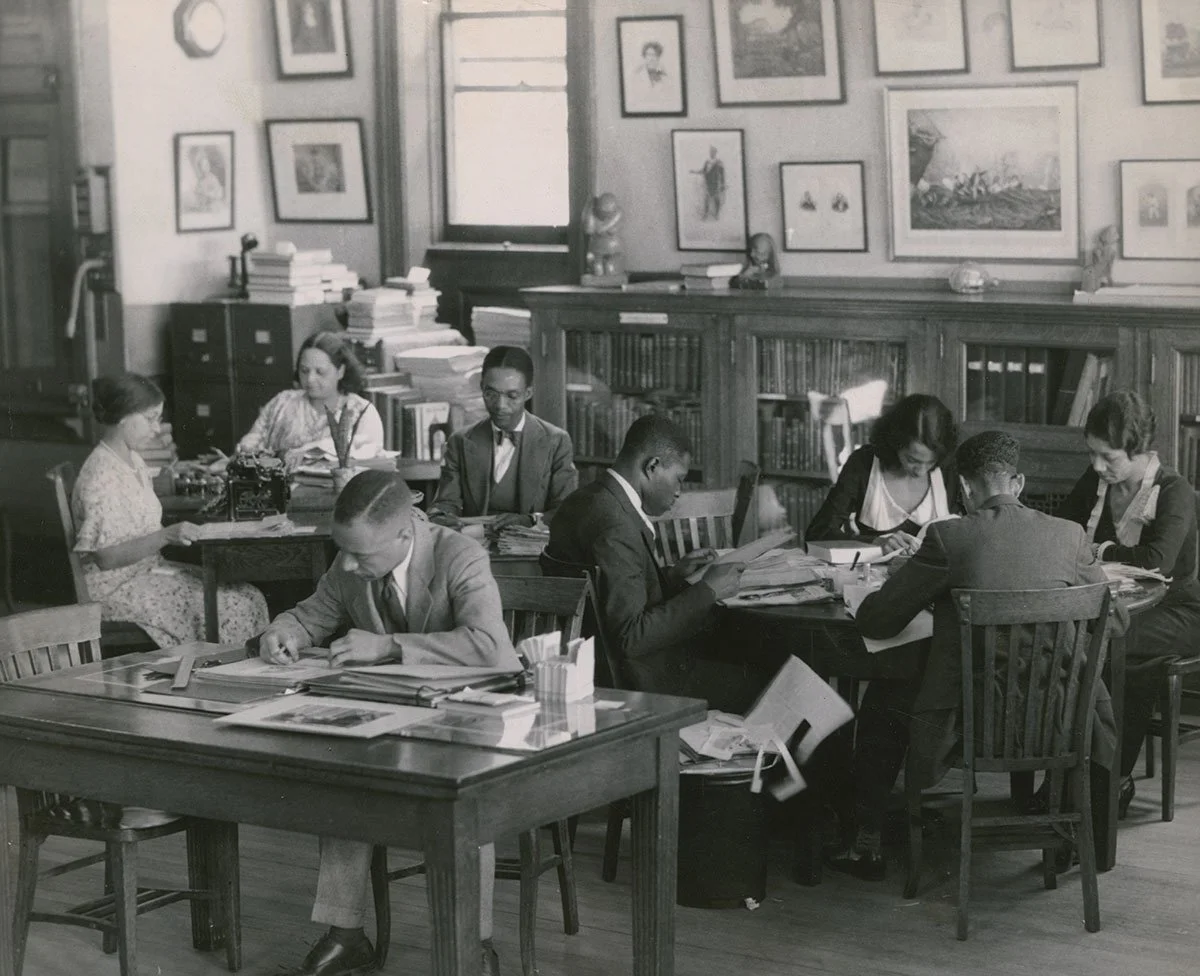
For centuries, the story of the fine and classical arts has been told as if it belonged to only a few.
A few nations. A few institutions. A few names repeated until they became shorthand for greatness. A few traditions preserved with the full weight of museums, conservatories, opera houses, archives, critics, patrons, and schools behind them.
This is how a canon is made.
Not simply through talent. Not simply through beauty. Not simply through genius. A canon is built through memory: what gets documented, funded, taught, restored, performed, acquired, reviewed, protected, and passed down.
It is shaped by the people and institutions with the power to decide what survives.
And for generations, Black artists have created inside, outside, against, and beyond those systems.
They have sung in languages that were never meant to hold them. They have danced on stages that once denied them entry. They have composed, painted, written, choreographed, acted, designed, taught, preserved, and imagined while carrying the pressure of being both artist and proof.
Proof of discipline.
Proof of intellect.
Proof of refinement.
Proof of belonging.
But Black artistry has never needed permission to be profound.
The question is not whether Black artists have shaped the fine and classical arts. They have. The question is whether the record has been honest enough to say so with the same clarity, permanence, and reverence granted elsewhere.
The Black Arts Codex begins there.
It begins with the understanding that absence is not always emptiness. Sometimes absence is evidence. Evidence of exclusion. Evidence of neglect. Evidence of archives that were never built, institutions that did not collect, critics who did not look closely, publishers who did not preserve, stages that did not invite, and histories that learned to speak around Black brilliance instead of through it.
But what has been left out has not been lost.
It lives in programs, photographs, recordings, letters, oral histories, reviews, family collections, church basements, community theaters, rehearsal rooms, classrooms, and the bodies of artists who carried entire lineages forward without institutional protection. It lives in the memory of those who witnessed. It lives in the work itself.
The Codex is an effort to bring those fragments into view.
Not as nostalgia. Not as recovery for recovery’s sake. And not as a separate history placed beside the “real” one.
The Black Arts Codex exists because Black art history is art history.
It is not supplemental. It is not a footnote. It is not an annual feature for February, a special program, or a corrective paragraph added after the fact. It is central to the story of beauty, form, innovation, discipline, and cultural imagination.
To open the archive is to refuse the narrowness of what we have inherited.
It is to ask different questions of the record:
Who was remembered?
Who was reviewed?
Who was funded?
Who was preserved?
Who was allowed to be complex?
Who was called classical?
Who was called experimental?
Who was called folk?
Who was called genius?
Who was asked to represent an entire people before being allowed to simply be an artist?
“Black art history is art history.”
These questions matter because language shapes legacy.
When Black artists are described only through struggle, the fullness of their work disappears. When their achievements are framed only as “firsts,” their artistry is reduced to entry. When their presence is treated as exception, the lineage behind them is erased.
The Black Arts Codex is concerned with that lineage.
It is concerned with the artists who made work before there was room for them. The ones whose names are known, but not deeply understood. The ones whose names should be known and are not. The ones whose contributions were absorbed into institutions without being properly credited. The ones who expanded traditions, challenged taste, and changed what the arts could hold.
This first issue begins with origin because every archive has one.
Not the origin of Black artistry itself, which predates every institution that has ever attempted to define it, but the origin of this inquiry. The moment we choose to look again. The moment we stop accepting absence as natural. The moment we understand that what was omitted from the record may still be waiting for us to become responsible enough to find it.
A codex is a book of knowledge. A record. A gathering of pages meant to be held, studied, returned to, and expanded.
The Black Arts Codex takes up that form as both symbol and practice.
Each issue will open a door into an artist, a movement, a discipline, a question, or a forgotten connection across the fine and classical arts. Some entries will look back. Others will speak to the present. All of them will be guided by the same belief: that preservation is not passive.
It is an act of care.
It is an act of power.
It is an act of future-making.
Because what we preserve determines what the next generation believes is possible.
A young singer should not have to stumble upon Leontyne Price as if she were a secret. A young dancer should not have to search for Black ballet lineage in fragments. A young composer should not have to wonder whether the concert hall has ever held the sound of someone like them. A young painter, actor, poet, designer, or scholar should not have to mistake institutional silence for historical truth.
The archive must become more accurate than that.
Opening the archive does not mean entering a sealed room and asking to be included. It means recognizing that the room was never complete. It means naming the lives, works, and traditions that were always part of the structure, even when the structure refused to acknowledge them.
This is the archive that answers back.
It answers omission with evidence.
It answers erasure with lineage.
It answers the question of belonging with something stronger than permission: presence.
The Black Arts Codex begins with a simple declaration.
Black artists have always been here.
Not outside the fine arts. Not adjacent to classical traditions. Not waiting at the edge of culture to be invited in.
Here.
Composing the sound.
Carrying the movement.
Writing the language.
Shaping the image.
Building the stage.
Expanding the form.
Keeping the memory.
This is not the beginning of the work.
It is the beginning of our return to it.
Further Study
The record continues.
Return to the Codex for future issues, archival sources, and monthly essays on Black artistic lineage.
Back to the Codex