What Is the Arts Canon?
Most of us were taught which artists, works, and traditions represented the highest standard of art. But who defined that standard, who was allowed to shape it, and what was excluded in the process?
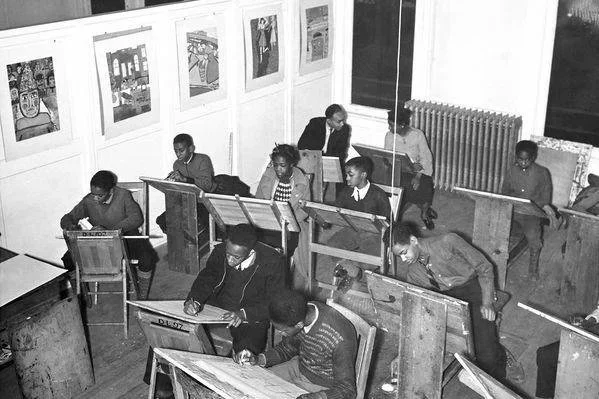
There is a version of arts history that many of us were given.
It arrives through textbooks, museum galleries, conservatory curricula, concert programs, exhibition catalogues, and the programming choices of institutions we are taught to trust. It presents itself as a record of excellence: the artists and works considered most important, assembled over time into a body of knowledge known as the canon.
The word comes from the ancient Greek kanon, meaning a measuring rod or standard.
That meaning remains useful. The canon has functioned as a measure against which artistic work is studied, evaluated, performed, exhibited, and preserved. It helps determine which artists become central to a discipline, which works are taught to new generations, and which traditions are treated as foundational.
But a canon is not a complete record of everything that has been created.
It is a record shaped by selection.
Understanding the arts canon therefore requires us to consider not only the work it contains, but the institutions, values, and historical conditions that determined what would be included.
How Canons Are Made
A canon is not discovered fully formed. It is built over time.
Artists enter the canon through a network of institutional practices. Their work is exhibited in museums, performed by major companies, published and distributed, reviewed by critics, studied by scholars, acquired by archives, and taught in schools and universities.
Through repetition, certain artists and works become familiar.
Familiarity produces recognition, and recognition begins to function as evidence of importance. Over generations, these choices become embedded in the structure of a discipline.
Museums, orchestras, conservatories, publishing houses, universities, art dealers, critics, collectors, and archives all participate in this process. They determine what receives attention, funding, documentation, and long-term preservation.
These institutions have never operated outside the cultural values of their time.
Giorgio Vasari, widely regarded as the founder of systematic art history in the West, published his influential Lives of the Artists in the sixteenth century. His account concentrated on artists working in Italy and showed a particular preference for those associated with Florence.
Vasari’s work was significant, but it was not a universal history of art. It reflected a specific geography, cultural tradition, and set of aesthetic values.
That framework was expanded and repeated across generations of scholarship. European artistic traditions became the primary reference point through which art history was organized, while work produced beyond those traditions was often treated as peripheral, specialized, or separate.
The canon was therefore shaped not only by artistic achievement, but by proximity to the institutions capable of recognizing and preserving it.
The Exclusion Was Structural
The conditions that shaped exclusion were not identical across every discipline. In each field, access was limited through different professional, educational, social, and institutional systems.
The result, however, was consistent: Black artists created substantial bodies of work while receiving unequal access to the mechanisms through which canons are formed.
In classical music, professional musicians’ unions established during the late nineteenth century were racially segregated. Black musicians responded by building parallel unions, ensembles, schools, and professional networks.
Black composers continued to produce symphonies, concertos, operas, chamber music, sacred works, art songs, and arrangements, even when their work received limited access to major orchestras, publishers, conservatories, and critics.
Florence Price composed four symphonies, two violin concertos, and more than 300 surviving works over the course of her career.
William Grant Still became the first Black composer to have a symphony performed by a major American orchestra when the Rochester Philharmonic premiered his Afro-American Symphony in 1931.
Their achievements are significant within the history of American classical music. Yet both composers remained outside the standard curriculum for much of the twentieth century.
Their limited presence was not the result of an absence of work. It reflected an institutional record that had not fully accounted for the breadth of their contributions.
A similar pattern can be found in visual art.
Norman Lewis and Hale Woodruff worked within abstraction during the period in which Abstract Expressionism was being established as one of the defining movements of twentieth-century American art. Yet both were largely excluded from the histories written around that movement.
Romare Bearden, primarily known for collage and photomontage, drew from abstraction, Cubism, photography, literature, music, and Black cultural life to develop a practice distinctly his own. His work expanded the language of American modernism, although it was not always interpreted within that broader history.
Museum practices also shaped how Black artistic production was understood.
In 1969, the Metropolitan Museum of Art presented Harlem on My Mind, an exhibition intended to examine the cultural history of Harlem. Although the exhibition included photography and documentary material, it did not include paintings or sculptures by Harlem-based artists.
The exhibition demonstrated a recurring divide within American museums: Black communities could be presented as cultural subjects while Black artists remained underrepresented as creators of fine art.
The Black Emergency Cultural Coalition emerged in response to this broader pattern. Its members advocated for the exhibition of Black artists, the hiring of Black curators, and greater accountability in how museums interpreted Black culture.
Their efforts contributed to an important shift in museum practice. They also made clear that representation within the arts is shaped not only by what appears on the wall, but by who has the authority to make decisions.
In ballet, Black dancers encountered exclusions framed through ideas of tradition, line, uniformity, and the visual structure of the corps de ballet.
These aesthetic standards were often presented as neutral. In practice, they were shaped around the bodies and appearances historically admitted into classical companies.
Black dancers were therefore judged against a visual ideal that had already been defined through whiteness.
Black choreographers and performers developed substantial bodies of work in modern dance, concert dance, musical theatre, social dance, and community-based traditions. Yet these histories were not always integrated into the broader study of American dance.
The division between classical ballet and other dance forms affected how Black choreographic innovation was documented and taught.
Opera and theatre present an additional challenge because performance is temporary by nature.
A production may exist for only a few performances. A play may remain unpublished. A score may survive in a private collection. A choreographic work may be passed between dancers without a complete written record.
Programs, photographs, reviews, scripts, oral histories, designs, and personal papers may become the only evidence that a work existed.
When these materials are not collected and preserved, gaps appear in the historical record. Those gaps can later be mistaken for an absence of artistic activity.
Black artists were never absent from the work.
They were creating companies, schools, theatres, ensembles, professional networks, publications, and systems of support. They were teaching one another, developing new practices, and carrying artistic knowledge across generations.
The archive may be incomplete. The artistic lineage is not.
The Problem of Fragmentation
In recent decades, significant recovery work has begun.
Archives have been established. Manuscripts and scores have been located. Retrospectives have been mounted. Scholarly attention has returned to artists whose work received limited recognition during their lifetimes.
This work is essential, but recovery can remain incomplete when artists are restored as isolated figures.
There is a distinction between erasure and fragmentation.
Erasure removes an artist from the historical record entirely.
Fragmentation allows an artist to reappear while separating them from the people, institutions, movements, and traditions that make their work fully understandable.
An artist may be included in one exhibition, documentary, anniversary program, or course without being integrated into the larger history of the discipline.
The name becomes visible, but the lineage remains difficult to see.
This matters because artistic achievement does not develop in isolation.
Artists study with teachers. They work alongside contemporaries. They respond to existing traditions. They collaborate with performers, writers, designers, patrons, and institutions. Their ideas are absorbed, transformed, and carried forward by others.
Without those connections, it becomes difficult to trace influence or understand innovation.
A musician encountering Florence Price through a single program note may learn that she composed symphonies and broke an important professional barrier. But that introduction alone does not explain the musical traditions she inherited, the materials she transformed, the artistic communities in which she worked, or the composers who continued the work after her.
One provides recognition.
The other provides context.
A living canon requires both.
“A canon is not simply a list of great works. It is a record of what a culture chooses to remember.”
What Restoration Requires
Substantial restoration work is already underway.
The Schomburg Center for Research in Black Culture has spent a century collecting, preserving, and interpreting materials related to Black life and cultural production.
The Getty Research Institute’s African American Art History Initiative supports the acquisition and study of archives related to African American art.
The Center for Black Music Research has documented musical traditions across the African diaspora, while the Black Plays Archive has expanded access to Black theatre in the United Kingdom.
These institutions have made important contributions to scholarship, access, and preservation.
At the same time, the archival record remains uneven.
Disciplines such as music and literature often leave behind scores, manuscripts, published texts, and recordings. Dance and theatre are more dependent on live performance, memory, notation, rehearsal practices, and materials that may not have been formally preserved.
This makes some traditions more difficult to reconstruct than others.
Restoration therefore requires more than recovering individual names or works. It requires rebuilding the context in which those works can be understood.
That context includes artistic lineage, professional networks, institutional history, cultural exchange, teaching practices, performance history, and the communities that sustained the work.
A name returned to the archive is important.
But a name alone cannot show us the full history.
The Black Arts Canon
The Black arts canon is the body of work, knowledge, practices, institutions, and artistic lineages created by Black artists across generations.
It includes the artists whose names are widely known and those whose work is still being recovered. It includes established institutions as well as the independent schools, theatres, companies, ensembles, publications, and community spaces that made artistic work possible.
It also includes the people who supported the work beyond the role of the individual artist: teachers, performers, scholars, archivists, producers, organizers, patrons, critics, and audiences.
The Black arts canon is not limited to one movement or historical period.
It is not the Harlem Renaissance alone.
It is not the Black Arts Movement alone.
It is not limited to work explicitly concerned with race, protest, or political life.
Black artists have worked across the full range of artistic form and human experience. Their work has addressed faith, love, grief, abstraction, mythology, history, domestic life, memory, beauty, movement, sound, place, and the future.
They have worked within established traditions, transformed those traditions, and created new ones.
To study the Black arts canon is to examine that work with the same depth routinely given to any other major artistic tradition.
A Black composer should be studied through harmony, form, orchestration, and musical influence—not only through the barriers they faced.
A Black visual artist should be examined through color, composition, material, technique, and historical context—not only through identity.
A Black dancer should be understood through musicality, line, dramatic interpretation, choreographic influence, and performance history—not only through the distinction of being first.
Historical context remains necessary, but it should expand our understanding of the work rather than become the only way the work is interpreted.
Further Study
The record continues.
Return to the Codex for future issues, archival sources, and monthly essays on Black artistic lineage.
Back to the Codex